Why iPhone IMEI Checks Reveal Everything (and Android Checks Don't)
Apple logs every manufacturing detail, sale, and repair in one centralized database. Android doesn't. When buying a used phone, this structural difference becomes glaringly obvious.
%2520Available%2520for%2520iPhone%2520but%2520Not%2520Always%2520for%2520Android_.webp&w=1080&q=80)
Plug an iPhone serial number into an Apple IMEI checker, and you instantly get the color, storage capacity, original purchase date, and active warranty status. Run a Xiaomi or Motorola device through a general IMEI check, and you might only see the model name and carrier blocklist status. The tool isn't broken. It's just hitting a fragmented wall.
As developers working with mobile identification APIs, we see this exact frustration daily. Users expect identical transparency across brands. But getting that data requires understanding the mechanical difference between a walled garden and a fragmented hardware market.
Apple's Walled Garden: The Global Service Exchange (GSX)
Apple controls its entire hardware and software lifecycle through its Global Service Exchange (GSX) system.
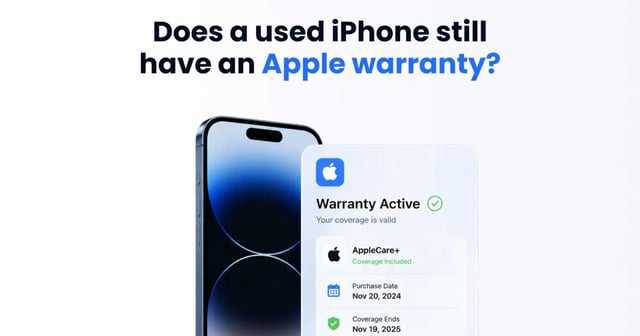
When a factory in Shenzhen finishes assembling an iPhone, the exact specs—color, storage, intended region—are uploaded directly to Apple's servers. The moment a user powers on the device and connects to Wi-Fi, it pings the activation server. That ping starts the warranty countdown.
The tracking continues long after the sale. If you take a cracked screen to an authorized repair provider, the technician scans the replacement display. Apple's servers update to reflect the repair. Because Apple controls the manufacturing, retail, operating system, and authorized repair network, data never leaves their system. This unified architecture is exactly why a specialized Apple IMEI check can pull a complete hardware history in milliseconds.
Android's Architecture: Siloed and Fragmented
Android is a decentralized network. Google provides the OS, but thousands of independent Original Equipment Manufacturers (OEMs) build the hardware.
A massive player like Samsung maintains an internal database for its Galaxy line, much like Apple. But a smaller brand might only track the bare minimum required to get the phone on a cellular network. These companies don't share manufacturing databases. What they do share with the GSMA is TAC allocation data, which is mandatory for every model. The theft blocklist itself is populated separately, by carriers and national regulators reporting lost or stolen devices.
If you buy a used Android, the history you can pull depends entirely on the specific manufacturer's public-facing APIs. Carriers know if the phone has an unpaid balance. The GSMA knows if it was reported stolen. But nobody outside the manufacturer knows the original color or exact warranty expiration unless that brand publishes the data.
System Feature | Apple (Centralized) | Android Ecosystem (Fragmented) |
Data Storage | Single global registry covering all devices. | Scattered across thousands of independent OEM databases. |
Repair Logs | Verified via authorized service networks. | Rarely logged officially due to independent third-party repairs. |
Cloud Locks | Consistent system-wide, but Apple retired its public Activation Lock lookup - status is confirmed on-device or through authorized channels. | Fragmented; dependent on specific OEM tools and Google accounts. |
Public API Access | High consistency via specialized verification tools. | Spotty; heavily dependent on specific regional brand APIs. |
The Samsung Regional Data Problem
Even within a single Android manufacturer, data gets siloed. Samsung's regional divisions often run separate databases that simply don't talk to each other.
A Galaxy phone originally sold in Europe might return zero warranty information on a US-based tracking server. The hardware is genuine, but the local data silo is empty. To pull accurate data on devices from massive global OEMs, you have to use a tool capable of routing the query to the correct regional server. Standard carrier checks fail here because they only ping local network registries.
Under the Hood: Delays and Blind Spots
Tracking device history means wrangling APIs from dozens of different corporate infrastructures. This explains why data sometimes lags.
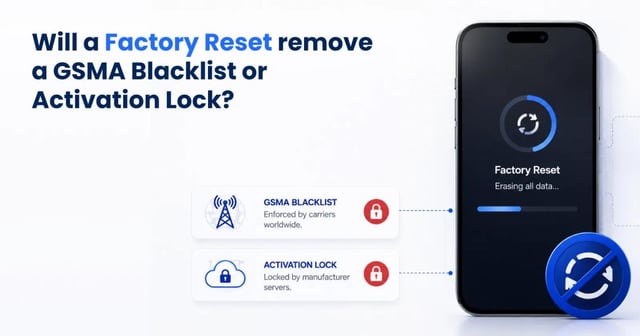
Carrier blocklists update in massive batches, not real-time streams. Depending on the operator and country, a stolen device can take anywhere from a few hours to several days to register across international blocklists. Furthermore, cloud locks (like Google’s Factory Reset Protection) tie directly to a user account, not the core manufacturer database. A clean IMEI check can still result in a locked phone upon boot. And if a device goes through official refurbishment, it often gets a new internal serial sequence, wiping its visible history profile while keeping its original IMEI for network connections.
What an IMEI Actually Tells You
People often assume a 15-digit IMEI contains hidden codes detailing the phone's color or memory size. It doesn't.
An IMEI is just a license plate. It doesn't tell you if the car has leather seats; it just provides a unique string for a database lookup. Here is the actual structure:
Segment | Acronym | Length | Technical Function |
Type Allocation Code | TAC | 8 Digits | Identifies the manufacturer and exact device model. |
Serial Number | SNR | 6 Digits | Uniquely identifies the individual hardware unit. |
Check Digit | CD | 1 Digit | Validates the sequence using the Luhn algorithm to catch typos. |
How to Verify Hardware Safely
Relying on a physical inspection is dangerous in the modern secondary market. Scammers routinely swap housings, flash modified ROMs, and print fake identifier stickers to pass off stolen or financed hardware. The internal software readouts are your only ground truth.
Ignore the sticker on the back of the box. Boot the device, open the phone dialer, and type *#06#. This forces the hardware to display its internal identifier straight from the modem baseband. Once you have that number, run it through an external database. For Samsung, Google, or Xiaomi devices, use a general IMEI check to ping the global GSMA database and regional servers. For iOS devices, use a dedicated Apple check that hooks into GSX pathways.
At IMEI Best, we see scammers exploiting this verification step constantly. They use modified firmware that displays a fake, "clean" IMEI right on the device screen when you open the settings menu. Never hand over cash for a used phone until you verify the baseband identifier through a trusted database on your own secondary device.
The Impact of Independent Repairs
Independent repair shops don't have access to official manufacturer databases. When a mall kiosk swaps a Samsung screen, the central Samsung database never records it. The next buyer runs a check, sees a clean history, and assumes the phone is all original.
Apple engineers built hardware-level component pairing to fight this. If a shop replaces an iPhone battery or screen without authenticating the repair through proprietary Apple software, the OS detects the serial mismatch. The phone logs the swap under Parts and Service History. While right-to-repair advocates rightfully criticize this practice as monopolistic, it provides undeniable transparency for used buyers. The software flags the hardware if the physical reality doesn't match the server data.
The Right to Repair Shift
Legislation in Europe and the US is actively forcing tech companies to open their hardware data. As laws compel brands to share repair manuals, parts, and historical logs with independent shops, the data fragmentation in the Android ecosystem should decrease.
Standardized API protocols may eventually force all manufacturers into a unified registry. Until then, buyers have to navigate the databases as they currently exist. Knowing how OEM servers and GSMA blocklists actually communicate is the only way to avoid buying an expensive brick.
Suggestion for you

Why paying to unlock a used iPhone is a scam (if you skip the IMEI check)
Avoid losing money on useless carrier unlocks. Discover how GSMA blacklists and iCloud Activation locks work, and why you need an IMEI check before buying.
Read moreAug 21, 2026
Does a Factory Reset Remove a GSMA Blacklist or Activation Lock?
A factory reset will never remove a GSMA blacklist or an Activation Lock. Learn why local data wipes can't fix remote carrier blocks, and how to check your IMEI.
Read moreAug 21, 2026
Does Buying a Used iPhone Void the Warranty? How to Check AppleCare Coverage by IMEI
Buying a used iPhone doesn't void the Apple warranty. Learn how to check your IMEI to verify the original purchase date, AppleCare status, and hardware locks.
Read moreAug 10, 2026