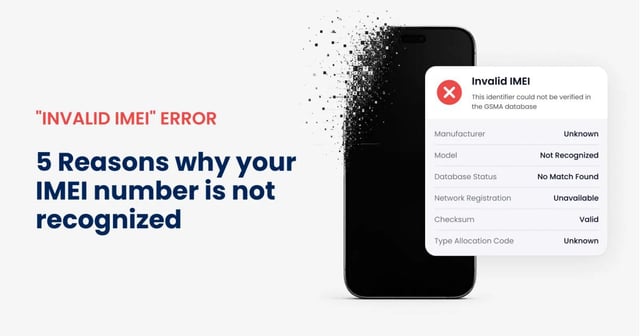
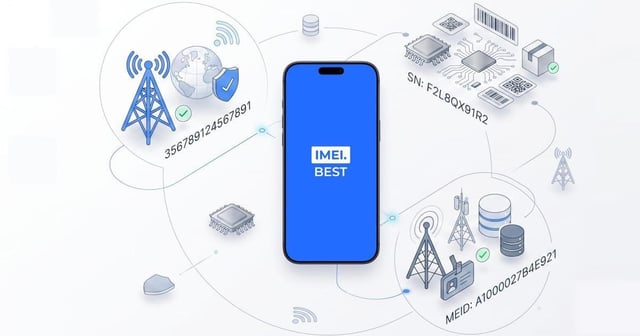
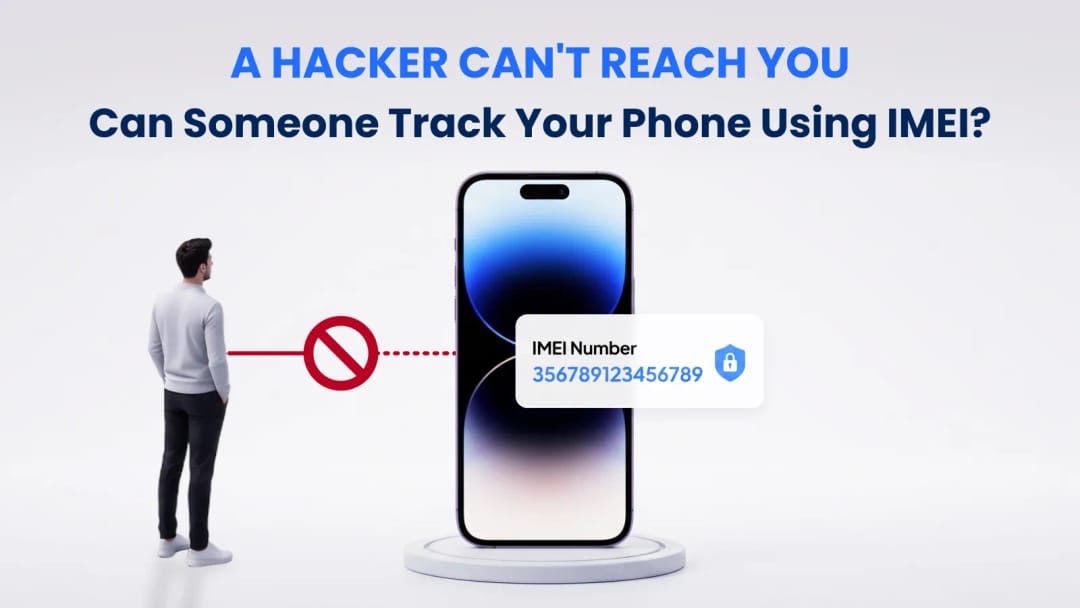
No, a regular person or hacker can't track your location or hack your phone using just your IMEI number. Only cellular providers and law enforcement agencies have the necessary access to the network infrastructure needed to triangulate a device's location using this identifier.
The fear that someone can pinpoint your exact location or steal your photos using a 15-digit serial number mostly comes from exaggerated movie plots. The International Mobile Equipment Identity (IMEI) is essentially a digital fingerprint for your phone's hardware. Your device uses it to introduce itself to local cell towers. Those towers need to know what kind of device is connecting so they can route calls properly and make sure it's authorized on the network.
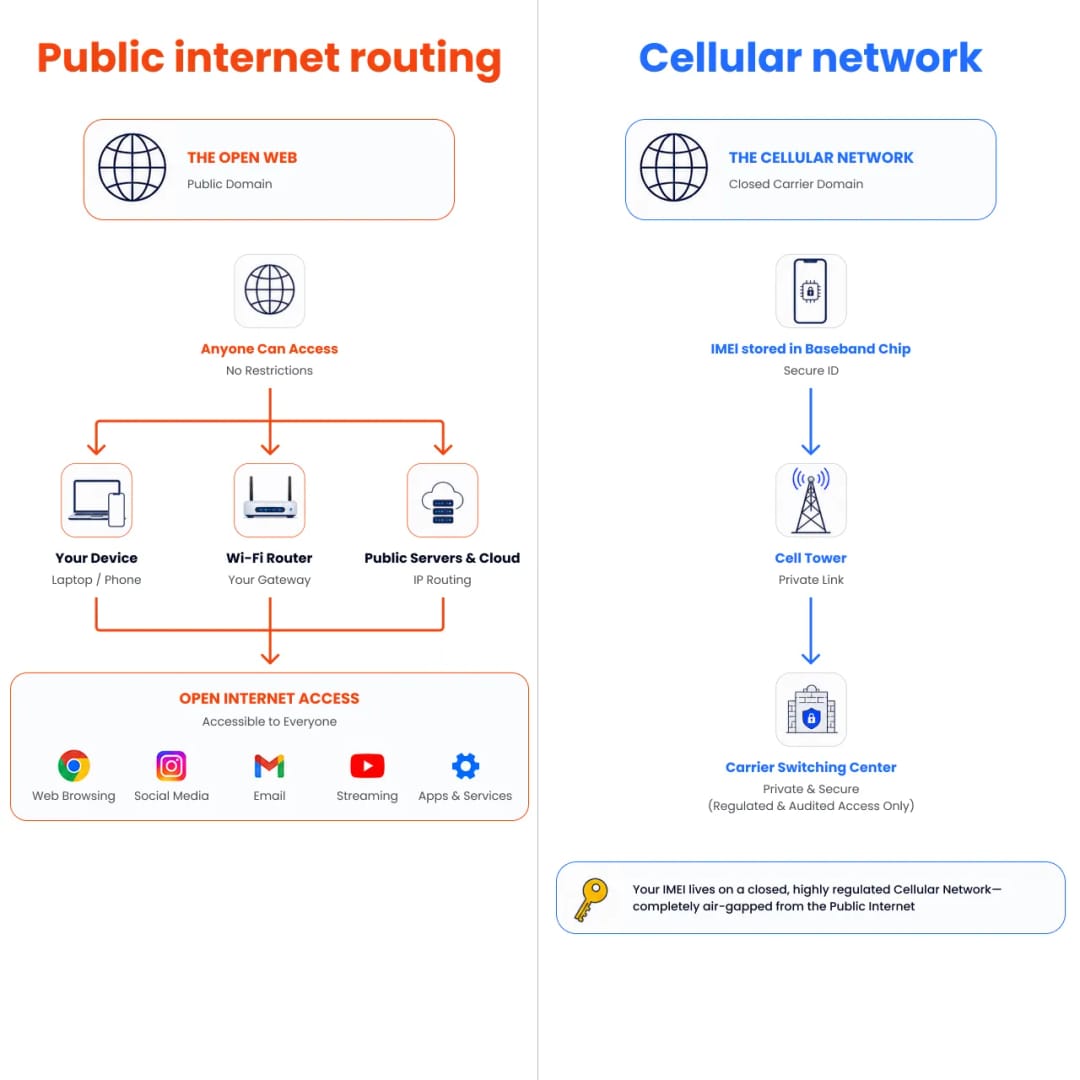
The public internet runs on IP addresses, but the cellular network operates on a completely separate, highly regulated internal architecture. Your IMEI doesn't broadcast over Wi-Fi, and it doesn't attach itself to your text messages or emails. It strictly talks to base stations owned by major telecom companies like AT&T, Verizon, or T-Mobile. Accessing the real-time routing data of those base stations requires multi-million-dollar infrastructure and top-tier security clearance.
What Can an IMEI Number Actually Be Used For?
An IMEI number is primarily used to identify a physical mobile device on a cellular network, check its warranty status, and verify if it's been reported lost or stolen. Network providers also use it to block stolen phones from accessing cellular services worldwide.
When a device is stolen, the owner reports the theft to their carrier, who then adds the IMEI to a centralized blacklist maintained by the GSMA (a global organization representing mobile operators). Once a phone lands on this list, no legitimate carrier will provide it with cellular service. It essentially becomes a Wi-Fi-only paperweight.
Beyond security, manufacturers and repair centers use the IMEI to look up the exact production batch, original color, storage capacity, and warranty expiration date. This data is invaluable in the used phone market. Buyers routinely look up these numbers to confirm the seller is being honest about the device's specs and history.
The Technical Reality of Mobile Network Tracking
Mobile network tracking relies on measuring the signal strength and timing between your device and multiple cell towers—a process requiring direct access to carrier switching centers. This infrastructure is entirely closed off to the public and independent software developers.
Cellular triangulation is a physical measurement process, not a software hack. When your phone is on, its internal baseband processor constantly pings nearby towers to find the strongest signal. The carrier's network core logs the time it takes for these pings to travel back and forth. By comparing signal delay and arrival angles across three or more towers (using TOA/TDOA methods), the network core calculates the device's physical coordinates.
This tracking mechanism exists exclusively on the telecom operator's side. The phone itself doesn't calculate its location using the IMEI, nor does it broadcast its GPS coordinates through it. An independent party looking at your 15-digit number has absolutely no way to query AT&T or Verizon switching centers to request those signal logs.
Expert Advice from imei best: "Never confuse your IMEI with your SIM card's IMSI or your phone's IP address. While a leaked IP might reveal your general city, an IMEI is virtually useless to a remote attacker unless they literally work inside your cellular provider's core network operations center."
Can a Hacker Track You With Just Your IMEI?
Hackers can't track your real-time location or access your private data using just your IMEI because the identifier doesn't grant access to the device's operating system or GPS hardware. The IMEI only communicates with cellular base stations, not the internet at large.
Cybercriminals target software vulnerabilities. They look for outdated operating systems, malicious app permissions, or phishing opportunities to deploy malware. Your IMEI lives entirely outside of this software ecosystem. It's hardcoded into a separate silicon chip called the baseband processor, which handles radio frequencies and nothing else. It simply doesn't have access to your photo gallery, banking apps, or contact list.
Even if a malicious actor gets hold of your IMEI, they lack the interface to send a payload to your phone. You can't ping an IMEI over the internet or send an SMS directly to it. Hackers rely on finding open ports on a network or tricking users into downloading executable files. Knowing the factory serial number of your radio hardware gives them zero leverage to compromise your digital security.
Why Law Enforcement and Carriers Can Track Your Device
Police and carriers track devices by querying internal carrier databases that log which specific cell towers an IMEI interacts with. They use legal subpoenas to force network operators to hand over the physical coordinates of the towers handling the device's signal.
Law enforcement agencies don't have a magic interface where they type in an IMEI and see a red dot blinking on a map. They rely entirely on the cooperation of telecom providers. During an investigation, detectives submit a court order to the relevant cellular provider, whose engineers then pull the historical or active connection logs for that specific IMEI.
These logs detail the cell sector and the exact tower the phone last communicated with. If the phone is moving, engineers can trace the handover process from one tower to the next to map its trajectory. Carriers build these logging systems for network optimization and billing, but they repurpose them for law enforcement under strict legal frameworks.
Tracking Capability | Law Enforcement & Cellular Carriers | Independent Hackers & General Public |
Access to historical cell tower logs | Full access via internal databases and legal subpoenas. | No access. Systems are air-gapped from the public web. |
Cellular triangulation ability | High accuracy using multi-tower signal timing. | Impossible without carrier switching center access. |
Modify GSMA blacklist status | Authorized to add or remove devices from the registry. | Cannot alter official GSMA database entries. |
Direct data access via IMEI | Cannot view personal files, only network location data. | Cannot view personal files or network data. |
Are IMEI Checkers Safe to Use Online?
Reputable online IMEI checkers are completely safe to use. They only query public and GSMA databases in read-only mode to retrieve device history. Submitting your IMEI to a secure checker doesn't expose your phone to any security risks or tracking vulnerabilities.
Users often hesitate to type their device identifier into a web form, wondering if it's really safe. The process is entirely benign. When you input your number into an active form, the system simply takes that string of digits and matches it against established registries. It asks the database a series of basic questions: Is this number reported stolen? Is the financial contract settled? What is the original factory model?
The checker doesn't install software on your phone, and it doesn't alert anyone to your physical location. It acts as a simple library catalog lookup. Providing your IMEI to a checking service is as harmless as typing a car's VIN into a history report website—you're simply pulling existing public records about a piece of hardware.
How Your IMEI Protects You When Buying a Used Phone
Verifying the IMEI before purchasing a used phone protects you from buying stolen property, devices with unpaid carrier financing, or counterfeit hardware. A clean report ensures the phone will activate successfully on your chosen network.
The used mobile market carries inherent financial risks. A seller might offer an incredibly cheap flagship device that looks visually flawless, but without verifying the internal serial number, you might purchase a phone that's still heavily financed. If the original owner stops paying their monthly bill, the carrier will blacklist the IMEI. You'll suddenly lose cellular service, and the carrier will refuse to lift the ban since you aren't the original account holder.
Counterfeiters also struggle to fake a valid IMEI registry. A cloned phone might run a reskinned version of Android meant to look like iOS, but the internal hardware identifier will quickly expose the fraud. Checking the number pulls the exact manufacturer specs. If the seller hands you a supposed iPhone 14, but the database says the hardware belongs to an old Nokia, you know immediately to walk away.
Deep Tech Realities of IMEI Architecture
The IMEI architecture operates on a hardcoded, 15-digit that is mathematically validated by the Luhn algorithm to prevent mistyping and input errors. This system reveals manufacturing origins and device capabilities without exposing any user-level metadata.
Understanding the structural anatomy of the identifier highlights exactly why it serves as an administrative tool rather than a tracking beacon. The telecom industry engineered this system for global hardware accountability:
- Type Allocation Code (TAC): The opening eight digits identify the exact model, the factory of origin, and the supported frequency bands. The GSMA assigns this code directly to manufacturers.
- Unique Serial Number: The next six digits serve as the sequential serial number for that specific handset coming off the assembly line.
- Mathematical Checksum: The final fifteenth digit acts purely as a validator. The system runs the previous fourteen digits through a formula; if the math doesn't match the final digit, the cell tower knows the IMEI is corrupted or spoofed and rejects the connection.
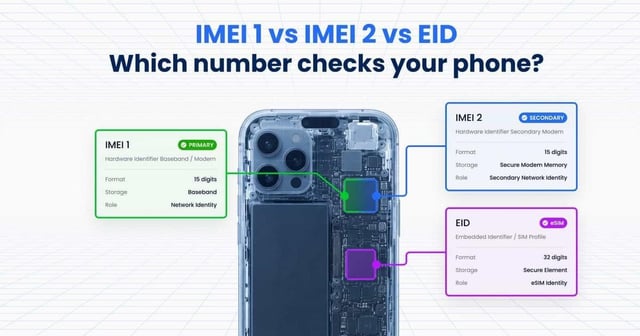
- Dual-SIM Devices: Modern dual-SIM smartphones feature entirely separate IMEI numbers for each radio component, meaning a single physical phone registers as two distinct devices to the network core.
Expert Advice from imei best, developer: "When buying a used phone, physically dial *#06# on the device and match that number against the one printed on the box or back glass. Scammers often swap housings on blocked logic boards, but the software-level IMEI never lies."
Can an IMEI Number Track Phone Location Without a SIM Card?
A phone can still be tracked by carriers via its IMEI even without a SIM card, as long as the device is powered on and trying to connect to emergency networks. The baseband processor constantly broadcasts the IMEI to nearby towers to ensure 911 services remain available.
People often mistakenly believe that removing the SIM card makes a phone entirely invisible. In reality, the SIM card only holds your subscriber identity (your phone number and billing account details). The IMEI remains permanently anchored to the phone's internal circuitry.
Federal regulations mandate that all mobile devices must be capable of dialing emergency services, regardless of their subscription status. Because of this, a phone without a SIM card will still scan the environment for any available cell tower and ping it using its IMEI to establish a basic radio link. When this handshake occurs, the carrier logs the physical interaction. Law enforcement can still subpoena those connection logs to determine the geographical area of the device, bypassing the need for a registered phone number entirely.
Is It Safe to Check Your IMEI Online Right Now?
Checking your IMEI using an active form is entirely safe, securely encrypted, and heavily recommended before finalizing any used phone transaction. A secure system strictly queries official databases to give you instant peace of mind without storing or exposing your personal identifier.
You now have the technical facts. Hackers can't weaponize your serial number, and strangers can't use it to locate your house. The only real power an IMEI holds is its ability to reveal the truth about a device's past. Utilizing a checking tool is the smartest preventative measure a buyer can take to instantly separate legitimate, clean devices from expensive, blacklisted paperweights.
Buying a used phone? Verify before you buy. Type your 15-digit IMEI below to uncover hidden carrier locks, unpaid bills, or stolen status. Takes exactly 30 seconds.