Is an IMEI the Same as a Serial Number? IMEI, ESN, and MEID
Is an IMEI the Same as a Serial Number? IMEI, ESN, and MEID Explained
Jul 09, 202610 min read
Author:
Key Takeaways
An IMEI is not a Serial Number. The IMEI is a standardized identifier used by cellular networks, while the Serial Number is a manufacturer-specific identifier used for warranty, repairs, production, and device support.
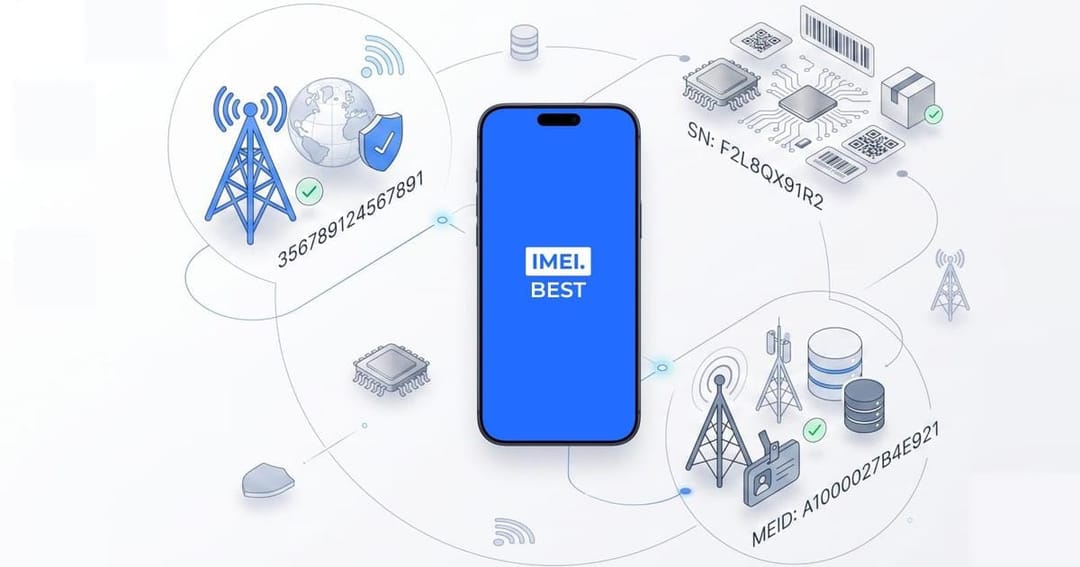
No. An IMEI is not the same as a phone's Serial Number. An IMEI identifies a mobile device on a cellular network globally, while a Serial Number serves as the manufacturer's internal tracking code for warranty and production control. A phone can have both an IMEI and a Serial Number, but they serve different purposes. ESN and MEID perform a related network identification function but were historically engineered for CDMA networks rather than the global GSM standard.
Understanding the specific architecture of device identifiers prevents costly mistakes when purchasing used hardware or processing bulk refurbishing lots. Every smartphone, tablet, and cellular-connected smartwatch carries a unique digital fingerprint. Private buyers rely on these numbers to verify they are not purchasing stolen property. Wholesale resellers and hardware restoration facilities depend on them to sort batches, filter inventory by condition, and confirm authenticity prior to initiating repairs or international exports. You can verify your device status immediately using the active IMEI check form available on this page.
The secondary market for mobile electronics operates heavily on trust, but trust requires verifiable data. Device identifiers bridge the gap between physical hardware and external databases managed by carriers, manufacturers, and law enforcement. A clean physical appearance means nothing if the underlying network identifier triggers a global blacklist. Hardware engineers designed these parallel identification systems—some tracking the physical build, others tracking network authorization—to create a tamper-evident ecosystem. Mastering the distinctions between these codes allows you to navigate carrier locks, validate warranty claims, and confidently assess the historical footprint of any mobile device.
Is an IMEI the Same as a Serial Number?
An IMEI is not a Serial Number. The IMEI is a standardized identifier used by cellular networks, while the Serial Number is a manufacturer-specific identifier used for warranty, repairs, production, and device support.
What Exactly Does an IMEI Number Tell You
The International Mobile Equipment Identity is a 15-digit numeric code revealing a device's manufacturer, model, country of origin, and network approval status. Network operators use this specific identifier to authenticate legitimate devices and block stolen hardware from accessing their cellular infrastructure.
Every time a mobile device attempts to connect to a cellular tower, it broadcasts its IMEI to the network's Equipment Identity Register. This registry functions as the central authentication point. If the broadcasted number matches an entry on the global blacklist—usually due to reported theft or unpaid carrier financing—the network instantly denies service. For businesses handling used electronics, the IMEI serves as the primary diagnostic tool. Pulling an IMEI report reveals whether a device is financed through AT&T, carrier-locked to T-Mobile, or flagged by international databases. It provides a transparent look at the device's network history, completely bypassing whatever software modifications a rogue seller might have applied.
The mathematical structure of the IMEI is highly standardized to prevent collisions and spoofing. The code breaks down into specific segments, each conveying precise manufacturing data.
The IMEI structure breaks down into three specific segments. First is the Type Allocation Code (TAC), an 8-digit sequence that identifies the specific brand and exact device model. This is followed by the Serial Number (SNR), a 6-digit sequence that uniquely identifies the specific unit within that model's production run. The code concludes with a single-digit Check Digit (CD), which validates the entire sequence using the Luhn algorithm to prevent transmission errors.
The Type Allocation Code is assigned by the GSMA, the global governing body for mobile communications. When you input an IMEI into a checker, the system reads the TAC to instantly populate the make and model. The final Check Digit is a mathematical checksum. If a user manually types the IMEI and swaps two numbers, the Luhn algorithm calculates a mismatch, instantly warning the system that the entered identifier is structurally invalid.
IMEI vs. Serial Number: What Is the Difference?
A Serial Number is proprietary to the device manufacturer and tracks internal supply chain metrics like production date, factory location, and warranty status without connecting to cellular networks. An IMEI remains a standardized global network identifier required specifically for devices utilizing cellular bands.
Manufacturers like Apple, Samsung, and Google generate Serial Numbers using their own proprietary alphanumeric logic. Because they control this logic, they can embed whatever supply chain data they find useful. A Serial Number can tell a manufacturer exactly which assembly line in which specific factory built the device on a precise day of the week. This information proves critical for quality control. If a specific batch of lithium-ion batteries begins failing, the manufacturer traces the hardware back through the Serial Number to issue targeted recalls. Devices without cellular capabilities, such as Wi-Fi-only iPads or Bluetooth MacBooks, possess a Serial Number but entirely lack an IMEI.
From a consumer and repair perspective, the Serial Number governs hardware support. When you walk into a manufacturer retail store for a screen replacement, the technician scans the Serial Number to verify the purchase date and active AppleCare or Samsung Care+ coverage. The Serial Number binds the physical hardware to the consumer's purchase agreement. Refurbishers often check the Serial Number to verify if a device still holds manufacturer warranty, adding significant premium value to the resale price.
Where to Find the IMEI, Serial Number, ESN, and MEID
On most iPhones, open Settings > General > About to find the IMEI and Serial Number. The same screen may also show a MEID, depending on the model and network configuration. You can often display the IMEI by dialing *#06# in the Phone app.
On Android phones, open Settings > About phone or Settings > About device. The exact menu name varies by manufacturer. The IMEI may also appear on the original box, SIM tray, or a device label.
Older CDMA phones may show an ESN or MEID instead of a standard IMEI. If a phone does not display an ESN, it may use a MEID or another identifier required by the carrier. Always confirm which identifier a carrier or checking service requests before submitting it.
The Anatomy of Mobile Device Identification
Mobile devices rely on a layered identification ecosystem where internal manufacturer codes bind physically with global telecommunication standards. This dual-layer system ensures that a device can be tracked both through hardware warranty databases and international cellular registries.
During the final stages of factory assembly, the motherboard—housing the baseband modem and the IMEI—is electronically paired with the logic board storing the Serial Number. This factory pairing creates a secure chain of trust. High-level refurbishing companies encounter this reality daily. If a technician swaps a damaged motherboard with a donor board to salvage a phone, the device will boot up presenting the new motherboard's IMEI alongside the new board's distinct Serial Number. Sophisticated checking tools cross-reference both numbers. If a buyer checks a phone and the Serial Number indicates a blue casing but the physical phone is red, it immediately flags the device as heavily refurbished or assembled from aftermarket parts.
Feature
IMEI
Serial Number (SN)
MEID
ESN
Primary Authority
GSMA
Device Manufacturer
TIA (Telecommunications Industry Association)
FCC (Historically)
Network Type
GSM, LTE, 5G
None (Hardware Only)
CDMA
Legacy CDMA
Format Structure
15 Digits (Numeric)
Alphanumeric (Varies)
14 Characters (Hexadecimal)
11 Digits or 8 Hexadecimal
Main Use Case
Network authentication and blacklisting
Warranty and factory tracking
CDMA network authentication
Obsolete network tracking
What Is an ESN on a Phone?
ESN stands for Electronic Serial Number. It was a unique 32-bit identifier created by the Federal Communications Commission to track devices on early CDMA networks. An ESN is not the same as an IMEI or a manufacturer Serial Number, although all three identify mobile hardware in different systems. The system became completely obsolete when manufacturers simply ran out of available 32-bit numerical combinations, prompting the industry shift to the longer MEID standard.
In the early days of mobile communications, the United States network landscape was heavily divided. While Europe adopted the GSM standard early on, US carriers like Sprint and Verizon built their infrastructure on CDMA technology. The FCC mandated the ESN to manage these CDMA devices. The 32-bit architecture meant there were roughly four billion possible combinations. As the mobile phone market exploded globally, manufacturers burned through these available numbers at an unprecedented rate. By 2006, the industry recognized an impending shortage. Worse, early ESNs were vulnerable to cloning. Fraudsters learned to intercept the static 32-bit broadcast and clone the ESN onto another physical device, allowing them to make free long-distance calls on the victim's account.
To solve the numerical exhaustion and patch security flaws, the Telecommunications Industry Association engineered the transition to the Mobile Equipment Identifier. ESN allocation officially ceased in 2008. Today, finding a device that relies solely on an ESN requires visiting a technology museum. However, the legacy of the term persists. Many industry veterans and automated wholesale systems still colloquially use "bad ESN" to describe a modern device with a blacklisted IMEI or MEID, even though the actual ESN protocol has been dead for over a decade.
What Is a MEID Number?
MEID stands for Mobile Equipment Identifier. It is a device identifier used primarily with CDMA networks. A MEID usually contains 14 hexadecimal characters, while a standard IMEI contains 15 decimal digits. Both identify cellular hardware, but they belong to different numbering systems.
How Do IMEI and MEID Compare in Modern Networks
An MEID functions similarly to an IMEI while operating as a 14-digit hexadecimal code specifically designed for CDMA network architectures. Modern smartphones carry both identifiers simultaneously to ensure seamless global compatibility across legacy CDMA towers and current GSM LTE or 5G infrastructures.
When the industry replaced the ESN, they designed the MEID to perfectly align with the global IMEI structure to streamline manufacturing. By using a hexadecimal format, which includes numbers zero through nine and letters A through F, the MEID vastly expanded the pool of available identifiers. For years, checking a phone for Verizon or Sprint meant verifying the MEID, while checking for AT&T or T-Mobile meant verifying the IMEI. The introduction of 4G LTE and 5G unified the network landscape, as LTE is inherently rooted in the GSM standard. As a result , CDMA carriers began shutting down their legacy 3G networks.
Expert Tip from Our Dev Team: "When bulk-checking devices for international export, always prioritize the GSMA IMEI blacklist over the MEID registry. A clean MEID on a legacy US carrier does not guarantee the IMEI is free from global GSM blacklists."
Even though CDMA networks are effectively sunset in the US, manufacturers still embed MEID protocols into baseband firmware to maintain compatibility with isolated global regions still operating legacy towers. When querying device data today, extracting the IMEI provides a much more comprehensive view of the device's status, as the entire global telecommunications industry has standardized around the GSMA's IMEI protocols.
Which Identifier Should You Use?
Use the IMEI when checking cellular network status, blacklist records, carrier restrictions, or device specifications. Use the Serial Number when checking manufacturer warranty, AppleCare, repairs, or service history. Use the MEID or ESN only when a carrier or device specifically requires that identifier.
Entering a Serial Number into an IMEI checker, or using an IMEI where a manufacturer Serial Number is required, may return an error or inaccurate result. A phone can have an IMEI and a Serial Number at the same time, but the two numbers should not be treated as interchangeable.
Why Must Resellers Verify Authenticity Before Repair
Verifying device identifiers before initiating repairs prevents businesses from investing expensive labor and replacement parts into stolen, blacklisted, or activation-locked hardware. Authentication protects profit margins by ensuring the restored device holds actual resale value in the secondary market.
A wholesale refurbisher processing pallets of used electronics faces constant margin pressure. The cost of an original OLED screen replacement can consume the entire potential profit of a device. If a technician replaces the screen, battery, and charging port on a phone, only to power it up and discover the IMEI is blocked for unpaid financing, the business suffers a severe loss. That device cannot be sold to domestic retail customers. It is relegated to parts-only status or restricted export markets, liquidating for a fraction of its intended value.
Integrating IMEI and Serial Number verification at the exact point of receiving solves this operational bottleneck. Sorting facilities scan the identifiers to immediately detect Factory Reset Protection locks, iCloud status, and carrier finance blocks. Devices failing these checks bypass the repair queue entirely. They are immediately routed to the dismantling line for component harvesting. This strict verification pipeline guarantees that expensive technician hours are spent exclusively on hardware capable of generating a retail return.
Global Blacklists and International Resale Mechanics
Network operators report stolen or unpaid devices to the GSMA global database, creating a worldwide blacklist that prevents compromised hardware from connecting to participating carriers. Exporters heavily cross-reference this database because a device blocked in the United States might function in regions that completely ignore GSMA protocols, creating complex international arbitrage opportunities.
The GSMA maintains the central Equipment Identity Register. When a consumer reports a phone stolen, their carrier uploads the IMEI to this central hub. Within hours, other participating carriers sync their local databases with the central EIR, effectively bricking the phone's cellular capabilities across the country and often allied regions. However, compliance with the GSMA database is entirely voluntary. Certain countries and regional carriers choose not to download or enforce the blacklist. This loophole sustains a massive international grey market. Wholesale buyers purchase blacklisted US phones at steep discounts, knowing the devices will operate flawlessly on specific networks in South America, Asia, or Eastern Europe.
Under the Hood: The Mechanics of Device Identification
Understanding the hidden engineering behind these numbers reveals exactly how telecommunications databases manage billions of devices simultaneously without system collapse.
•TAC Allocation Limits: The GSMA restricts a single Type Allocation Code to a maximum of one million devices. When a popular model like the iPhone 15 exceeds one million sales, Apple must request a brand new TAC. This is why a single phone model often possesses dozens of different valid TAC prefixes in checking databases.
•The Check Digit Illusion: The 15th digit of the IMEI is never transmitted across the cellular network. The baseband modem drops the Check Digit before transmission, sending only the 14-digit core to the cell tower to save bandwidth, as the digit's only purpose is local input validation.
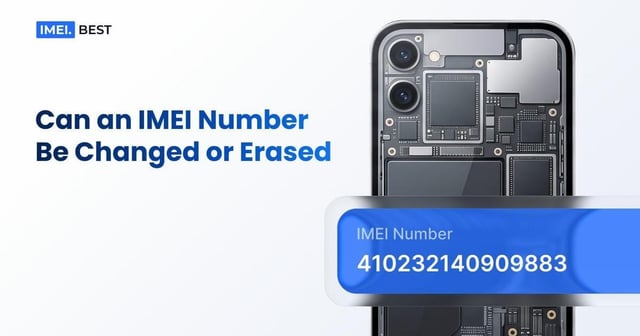
•Baseband Isolation: Modern smartphones isolate the IMEI inside a highly secure hardware enclave separate from the main operating system. This architecture ensures that even if a user roots an Android device or jailbreaks an iOS device to gain absolute software control, they cannot permanently overwrite the physical network identifiers stored in the modem's secure, tamper-protected memory.
•EID Evolution: The rise of eSIM technology introduced the Embedded Identity Document, a massive 32-digit identifier handling virtual SIM provisioning. The EID is rapidly becoming more critical than the IMEI for network activation, pushing the industry toward software-defined cellular identities.
Fraud Prevention Strategies for Used Phone Buyers
Private buyers must strictly match the physical device identifier printed on the hardware with the software identifier displayed in the settings menu, and run that sequence through a reliable checking service before exchanging funds. This multi-step verification eliminates the risk of purchasing modified hardware or falling victim to housing swap scams.
Scammers constantly exploit information asymmetry in the used electronics market. A common tactic involves taking the logic board of a blacklisted or stolen phone and placing it inside the pristine outer housing of a broken phone with a clean history. If a buyer only checks the IMEI laser-engraved on the SIM tray or the back glass, the checker will report a clean device. However, the moment the buyer inserts their SIM card, the internal logic board broadcasts its actual, blacklisted IMEI to the carrier, resulting in immediate service denial..
To defeat this, buyers must power on the device and dial *# on the keypad. This universal shortcode interrogates the baseband modem directly, forcing the true hardware IMEI to display on the screen. The buyer must then ensure this on-screen number perfectly matches the physical engravings and the original retail box. Running the software-verified number through an active checking portal guarantees the buyer receives accurate data regarding the device's current network standing and lock status.
Integrating Identifier Checks Into Quality Control
Automated IMEI and Serial Number validation pipelines allow hardware refurbishers to instantly sort massive incoming batches by carrier lock status, warranty validity, and financial clearance. Software-driven verification eliminates human data entry errors and exponentially accelerates the grading process for massive wholesale operations.
Manual checking via individual web portals fails to scale when a facility processes thousands of devices daily. Enterprise refurbishers utilize API connections directly tied to GSMA and manufacturer databases. When a worker plugs a device into a diagnostic diagnostic station, the software automatically extracts the IMEI and Serial Number via data cable. The API pings global registries in milliseconds, returning a comprehensive payload detailing the exact model specifications, active carrier locks, MDM profile status, and blacklist history.
This data instantly updates the facility's Enterprise Resource Planning software, automatically generating a routing label. Clean devices route to cosmetic grading, while locked devices route to specialized unlocking technicians or the parts bin. By fully automating the ingestion of these critical hardware identifiers, businesses strip subjectivity out of the sorting process. They transform static 15-digit numbers into actionable intelligence that dictates the exact lifecycle and financial trajectory of every piece of hardware entering their facility.