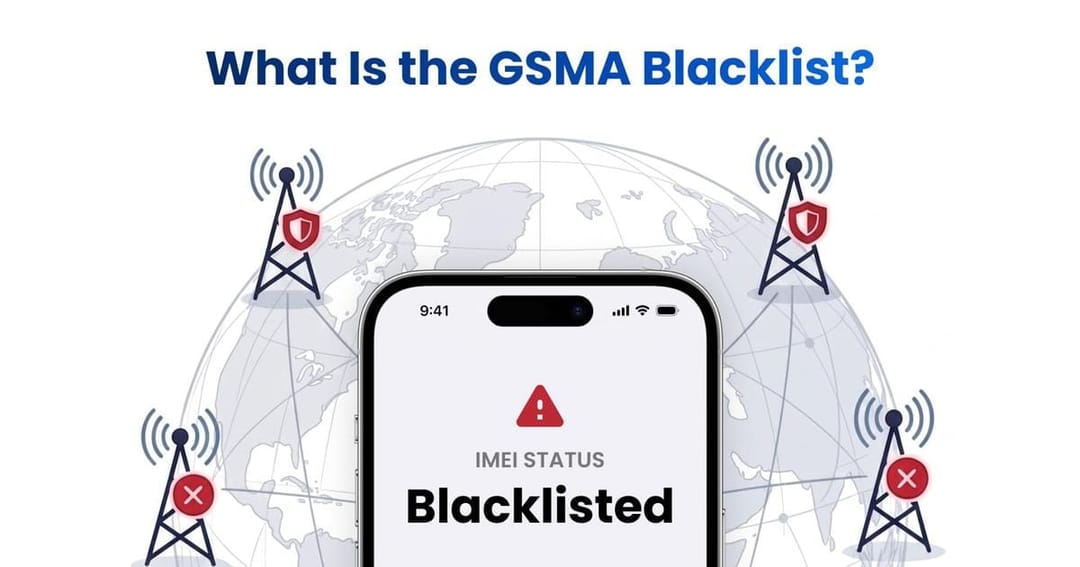
The GSMA blacklist is a global database that tracks the IMEI (International Mobile Equipment Identity) numbers of lost, stolen, or compromised devices. Mobile carriers around the world share this registry to block flagged hardware from connecting to their networks.
To understand how it works, you have to look at the cellular infrastructure. Every phone has a unique 15-digit IMEI burned into its baseband processor. Whenever a device tries to connect to a cell tower, the network checks this number first. The GSMA (Global System for Mobile Communications Association) manages the central database for these identifiers. For anyone buying used phones—whether it’s a consumer on the secondary market or wholesale distributors processing trade-ins—checking this registry is the only way to make sure you aren't buying a device that's permanently blocked.
How Does the GSMA Device Registry Operate Globally?
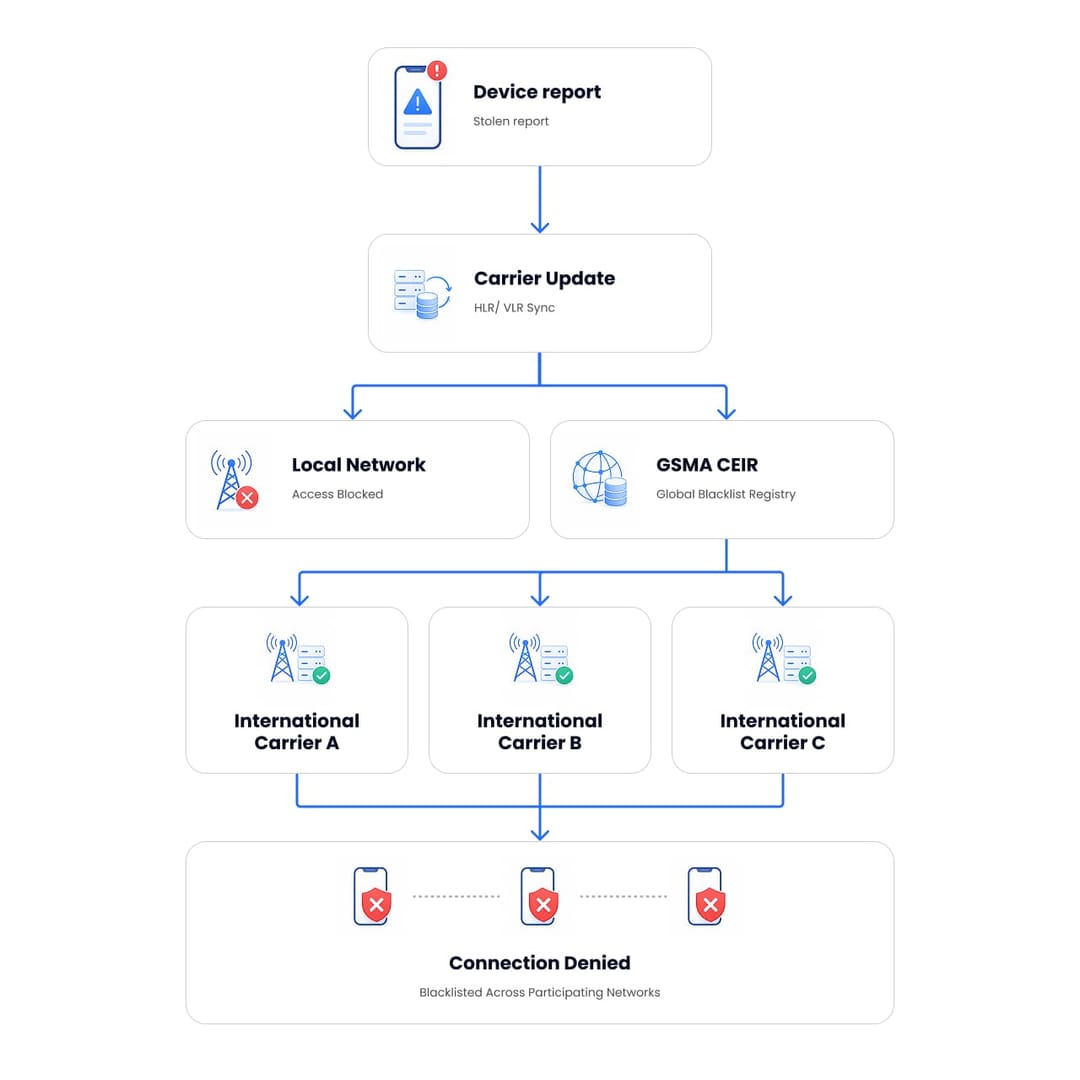
When a phone powers on, it attempts to connect to the nearest cell tower. The network switching subsystem instantly routes this connection request to a local Equipment Identity Register (EIR). If the device is clear locally, the system cross-references it with the central GSMA database.
This global registry aggregates reports from carriers, law enforcement, and insurance companies. Major players like T-Mobile, AT&T, and Verizon constantly update this central hub. Because the data syncs across borders, you can't simply steal a phone in New York, ship it to California, and activate it on a different participating carrier the next day. If the IMEI matches a blacklisted entry, the network denies all communication services on the spot.
Why Do Mobile Carriers Blacklist Specific Devices?
Carriers typically block devices for a few core reasons: theft, loss, unpaid bills, or insurance fraud.
The most common trigger is a customer reporting their phone missing or stolen. Insurance companies also play a big role here. If someone files a claim for a replacement, the insurance provider ensures the original hardware is blacklisted so the user can't illegally sell the "lost" phone.
Then there are financial blocks. U.S. carriers often subsidize expensive smartphones through monthly payment plans. If a customer stops paying their bill or opens a fraudulent account, the carrier issues a financial block. While this starts as a local restriction, it often propagates to the global GSMA blacklist to prevent the user from jumping ship to a competing network with an unpaid device.
Equipment Identity Registers and Network Switching
Think of the Equipment Identity Register as the bouncer for a cellular network. It categorizes devices into three distinct lists to stop users from bypassing hardware bans simply by swapping SIM cards:
- Whitelist: Valid, clean IMEIs with full network access.
- Greylist: Devices under observation. Network engineers might use this to track malfunctioning hardware without cutting off service.
- Blacklist: The absolute restriction zone.
Once an IMEI hits the blacklist, the network blocks it at the baseband level. While the phone might still show signal bars or let you dial emergency services (as required by federal law), standard calling and data routing will fail completely. The block is tied to the phone's physical logic board, so changing the account or SIM card won't help.
- Primary Cause: A local financial block is typically triggered by unpaid installment plans or delinquent billing. Conversely, a global GSMA block is the result of verified theft, loss, or insurance claim fraud.
- Network Scope: Local restrictions are usually limited to the issuing carrier and its associated MVNOs. A global blacklist ensures the device is blocked across all participating international networks.
- Data Propagation: Information regarding a local block is kept strictly within the issuing carrier's EIR and billing system. Global blacklist data is actively synchronized with the Central Equipment Identity Register.
- Bypass Difficulty: Resolving a local block is highly difficult and requires full account settlement. Bypassing a global blacklist is extremely high in difficulty, as it mandates verification from the original owner.
- Market Impact: While a local financial block lowers the device's value and restricts domestic resale, a global GSMA blacklist renders the device strictly useful for parts harvesting.
Can a Blacklisted Phone Work Overseas After Resale?
Usually, a blacklisted phone won't work internationally because participating carriers share the same synced data. However, there's a catch: networks in certain countries outside the GSMA global alliance might still allow these devices to connect since they don't check the central database.
This loophole is exactly what drives the global grey market. Devices blocked by U.S. carriers are frequently exported in bulk to regions where local operators haven't integrated with the central clearinghouse. For wholesale distributors and refurbishers, navigating this map is a major operational risk. Shipping a pallet of flagged devices to a country with strict registry synchronization can lead to customs seizures. Professional exporters completely avoid this risk by running a global IMEI check before moving any inventory.
Wholesale Batch Sorting and Authentication Protocols
When logistics centers process thousands of trade-in phones, checking each one manually isn't an option. Refurbishers rely on automated screening software to instantly separate clean phones from blacklisted ones to protect their profit margins.
Technicians use multi-port diagnostic hubs that plug directly into the devices. The software reads the baseband data, extracts the IMEI, and sends an API request to commercial databases tied to the global registry. The results come back in milliseconds. Clean devices move on to data wiping and cosmetic grading, while stolen hits are sent straight to the teardown line to be harvested for micro-soldering parts.
Expert Tip: Always verify the Financial Exchange status alongside the standard global registry. As developers of the imei.best platform, we often see devices that show a clean global status today, only to face a localized block weeks later when the original owner defaults on their carrier installment plan.
Database Update Intervals and Response Metrics
The underlying system relies on specific technical parameters to maintain the global registry efficiently. Here is a breakdown of those specifications and their operational impact:
- Registry API Latency: Responses typically take 200 to 500 milliseconds, which enables real-time batch sorting for bulk operations.
- EIR Sync Frequency: Synchronization happens every 12 to 24 hours, creating a brief window where stolen devices might temporarily connect to a network.
- Data Payload Size: The system keeps payloads under 2 Kilobytes per query, allowing for high-volume, concurrent database checks.
- Identifier Length: The standard is 15 digits (Luhn checked), which prevents manual entry errors during individual queries.
- Data Retention: Records are kept indefinitely, ensuring that older flagged models remain blocked permanently.
The Engineering Behind Carrier Data Exchange
The system relies on secure APIs to quickly push device status updates from regional nodes to the central clearinghouse. However, because the system relies on batch processing, there are a few interesting technical quirks.
For example, there is often a brief syncing delay. A phone reported stolen in one state might still connect to a roaming tower for a few hours before the local registry fully updates. To fight back, modern carriers use predictive algorithms. If an IMEI tries to connect to cell towers in entirely different geographic locations at the same time, the system automatically flags it for baseband cloning and greylists it.
To handle over a million status updates daily without lagging cell tower handshakes, the central database uses massive server clustering. Meanwhile, advanced diagnostic tools now read the IMEI straight from the physical memory chip, bypassing the operating system entirely to defeat software-level spoofing.
How to Verify Authenticity Before a Trade-In
The primary goal when evaluating a used smartphone is to rule out hidden network restrictions and unauthorized logic board repairs. While directly spoofing or rewriting an IMEI is nearly impossible on modern hardware, malicious actors frequently utilize temporary software bypasses to mask an active network block. Because of this, the absolute first step in verification is forcing a full factory reset or applying a system update. This instantly wipes away temporary exploits and reveals the device's true network state.
To authenticate the hardware, start by dialing *#06# to generate the digitalfier. Cross-reference this output with the physical IMEI etched into the device chassis or SIM tray—keeping in mind that United States models of the iPhone 14 and newer rely exclusively on eSIM technology and lack a physical slot entirely. Next, run that specific identifier through a direct query on imei.best.
This database check is critical for two reasons:
- Network Status Validation: It instantly confirms the SIM-lock status. A "Blocked" return means the hardware is explicitly barred from cellular networks, whereas an "Unlocked" status clears the device for immediate use.
- Hardware Specification Matching: The query pulls the exact original factory specifications. If the database details a black 64GB unit, but you are physically inspecting a white 256GB device, you have undeniable proof of unauthorized logic board tampering or transplantation.
Modern operating systems add another strict layer of hardware security by continuously validating component history. If a device has received unauthorized replacement parts—such as a screen, camera, or battery—the OS will prominently display an "Unknown Part" warning. This security is even more aggressive at the network level. If a technician attempts an unauthorized physical repair on the GSM modem (baseband), it severs the cryptographic link to the device's serial number. Upon the next factory reset, the phone will trigger a fatal activation error and permanently disable all cellular communication capabilities.
Ultimately, running a comprehensive IMEI check through imei.best, combined with a standard factory reset, remains the ultimate defense against purchasing stolen, leased, or permanently blocked hardware. Third-party services cannot legally or permanently "clean" a device from the global blacklist, and any temporary software workarounds will inevitably collapse during routine carrier network audits.
Can You Remove a Device From the Blacklist?
Only the company that originally blacklisted the device can remove it from the central registry. If you want to restore network access, you have to resolve the issue directly with that specific carrier or insurance provider.
The internet is full of third-party services claiming they can "clean" or "unbar" a blocked IMEI for a fee. Technically speaking, these services cannot delete records from centralized carrier databases. They usually exploit temporary loopholes or bribe internal employees, which almost always results in the phone getting permanently re-blocked during the next routine system audit.
The only legitimate path is through the original account holder. Paying off a delinquent balance or proving to the fraud department that a lost phone was recovered will trigger an official unblock command.Once the carrier approves it, clearance typically ripples through participating network nodes within a couple of days, though the exact timing varies by country.
The Future of Cross-Border Device Tracking
The shift toward eSIMs (embedded SIM profiles) and hardware-level cryptography is completely changing the security landscape. In the near future, device spoofing will become virtually impossible.
Unlike physical SIM cards, eSIMs require a direct cryptographic handshake with a carrier's provisioning server just to download a network profile. If the device's hardware identifier is flagged in the global registry, the server simply refuses to issue the profile. Manufacturers are also starting to burn unique digital certificates directly into the secure enclaves of phone processors.
Soon, the central registry won't just look for a 15-digit string—which can theoretically be rewritten with specialized flashing hardware. Instead, carriers will query the unalterable cryptographic signature of the silicon chip itself. This transition will effectively wipe out the black market for cloned devices and push the wholesale refurbishment industry to adopt even tighter authentication protocols.